xnxnxnxn cube algorithms pdf download

The XNXNXNXN cube presents a significant challenge, demanding advanced algorithms for resolution; downloadable PDF guides, like those from May 17, 2025, are invaluable.
What is an XNXNXNXN Cube?
The XNXNXNXN cube is a larger, more complex variation of the classic Rubik’s Cube, featuring a 7x7x7 structure. Solving it requires understanding not only the basic principles of cube manipulation but also advanced algorithms due to the sheer number of pieces. Resources like downloadable PDF guides, specifically mentioning algorithms from May 17, 2025, become essential tools for solvers. These guides detail step-by-step solutions, often building upon methods for smaller cubes, but adapted for the increased complexity and potential parity errors inherent in larger puzzles. Mastering this cube demands dedication and access to comprehensive instructional materials.
Why is it Challenging?
The XNXNXNXN cube’s difficulty stems from its massive number of possible configurations, far exceeding that of a 3×3. Solving it isn’t simply about memorizing algorithms; it’s about understanding how those algorithms affect numerous layers simultaneously. Parity errors, unique to even-layered cubes, add another layer of complexity, requiring specialized correction techniques detailed in downloadable PDF guides (referenced from May 17, 2025). These guides are crucial because intuitive solving becomes nearly impossible. The sheer scale demands precise execution and a deep understanding of cube notation and permutation principles.

Understanding Cube Notation
Standard notation (U, D, R, L, F, B) extends to layer notation for larger cubes; mastering this is vital, as detailed in available XNXNXNXN algorithm PDFs.
Standard Cube Notation (U, D, R, L, F, B)
The foundation of solving any Rubik’s Cube, including the complex XNXNXNXN, lies in understanding standard notation; ‘U’ denotes the Up face, ‘D’ the Down face, ‘R’ the Right, ‘L’ the Left, ‘F’ the Front, and ‘B’ the Back. A letter alone signifies a 90-degree clockwise turn, while a letter with an apostrophe (‘) indicates a counter-clockwise turn.
For larger cubes, this basic system expands, but remains crucial. Many XNXNXNXN cube algorithm PDFs begin with a thorough explanation of this notation, as it’s essential for interpreting and executing the sequences needed to solve the puzzle efficiently. Without this understanding, even the most detailed guide becomes unusable.
Layer Notation for Larger Cubes
As cubes grow beyond the 3×3, layer notation becomes vital. While U, D, R, L, F, B still apply, they often refer to outer layers. For the XNXNXNXN cube, algorithms frequently involve inner layer moves denoted with numbers or additional notation to specify depth. Understanding these extensions is key to deciphering complex solution guides.
PDF resources dedicated to the XNXNXNXN often detail these nuanced notations. They explain how to target specific layers without ambiguity. Mastering this layer-specific language is crucial for successfully implementing algorithms found in downloadable guides and achieving a solve. It builds upon the standard notation foundation.
Orientation and Permutation
Solving the XNXNXNXN cube necessitates distinguishing between piece orientation and permutation. Permutation refers to the position of a piece, while orientation describes its rotational alignment. Algorithms often address these separately, first positioning pieces correctly, then twisting them into the proper orientation.
PDF guides detailing XNXNXNXN algorithms frequently categorize steps based on these concepts. They’ll present algorithms specifically for orienting corners or edges, followed by those for permuting them. Recognizing whether an algorithm targets orientation or permutation is vital for correct application, as detailed in downloadable resources from May 17, 2025.

Algorithms for Solving the XNXNXNXN Cube
Mastering the XNXNXNXN cube requires a repertoire of algorithms; downloadable PDF guides, such as those available since May 17, 2025, are essential.
Beginner’s Method Overview
For newcomers to the XNXNXNXN cube, a layered approach is recommended, mirroring strategies for smaller puzzles but with increased complexity. Initial steps involve solving the first layer, focusing on correctly positioning and orienting corner and edge pieces. Downloadable PDF guides, appearing as early as May 17, 2025, provide visual aids and step-by-step instructions for these foundational stages. Subsequent layers build upon this base, requiring memorization of algorithms to manipulate larger blocks. Understanding standard cube notation (U, D, R, L, F, B) is crucial for interpreting these algorithms, and practice is key to achieving fluency.
Solving the First Layer
Tackling the first layer of the XNXNXNXN cube demands careful piece placement and orientation. Begin by forming a cross on one face, then inserting the corner pieces correctly. PDF algorithm guides, available since at least May 17, 2025, detail specific move sequences for these tasks. Remember that twisting pieces can relocate them diagonally opposite and inverted – understanding this is vital. Practice twisting adjacent layers to grasp piece movement. Focus on achieving a solid first layer before progressing, as it forms the foundation for subsequent steps.
Solving the Second Layer
The second layer presents increased complexity on the XNXNXNXN cube. Utilize algorithms – often detailed in downloadable PDF guides from sources like those dated May 17, 2025 – to insert the edge pieces without disrupting the completed first layer. Pay close attention to orientation; incorrect placement can lead to parity errors later. Remember that moving a piece can drastically alter its final position. Consistent practice with these algorithms, alongside understanding piece movement, is crucial for efficient second-layer completion. Focus on maintaining the integrity of the first layer throughout this stage.
Solving the Third Layer
The final layer of the XNXNXNXN cube demands mastery of advanced algorithms, frequently found in downloadable PDF resources (referenced May 17, 2025). This stage involves orienting and permuting the last layer pieces, often requiring multiple algorithm applications. Be mindful of potential parity errors, which are common on larger cubes. Understanding how moves affect piece positions – reversing moves returns the puzzle to its prior state – is vital. Precise execution and memorization of algorithms are key to a successful solve. Patience and careful observation are essential for navigating this complex layer.
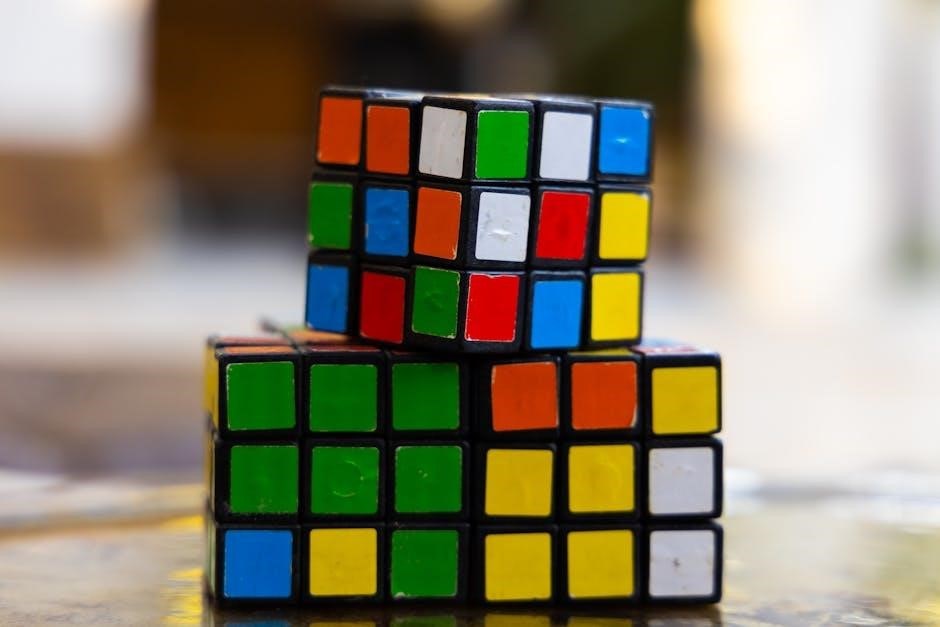
Advanced Solving Techniques
Techniques like Collage Method and ZBLL require extensive algorithm knowledge, often detailed in downloadable PDF guides, enhancing speed and efficiency in solving.
The Collage Method for the XNXNXNXN cube is an advanced technique focusing on building block-like structures, or “collages,” on the cube’s faces. It deviates from layer-by-layer solving, instead prioritizing the creation of pre-defined patterns. Mastering this method necessitates a deep understanding of piece movements and a substantial algorithm library.
Numerous PDF guides, often available online, detail the specific algorithms and pattern recognition required for successful implementation. These resources typically break down the process into manageable stages, illustrating how to build and connect these collages efficiently. The method’s complexity demands dedicated practice and memorization, but offers significant speed improvements for experienced solvers.
ZBLL (Zborowski-Bruchem Last Layer)
ZBLL, or Zborowski-Bruchem Last Layer, is a highly advanced technique for solving the final layer of larger cubes, including the XNXNXNXN. It involves recognizing a specific last layer case and applying a single algorithm to solve it directly. This method drastically reduces solve times for proficient cubers, bypassing multiple steps.
Comprehensive ZBLL algorithm sets are often compiled into downloadable PDF guides. These resources categorize cases and provide the corresponding algorithms, requiring significant memorization. Mastering ZBLL is a substantial undertaking, but unlocks incredible speed potential. Finding relevant PDFs is crucial for learning this technique.
EOline (Edge Orientation Last Layer)
EOline focuses on orienting the edges of the last layer of the XNXNXNXN cube, typically as a step before applying ZBLL. It’s a powerful technique for optimizing solves, ensuring edges are correctly positioned for the final layer algorithms. While less algorithm-intensive than ZBLL, it still requires learning a set of specific sequences.
PDF guides detailing EOline algorithms are readily available online, often included within larger XNXNXNXN solving resources. These guides categorize edge orientation cases and provide the corresponding algorithms. Efficient EOline execution significantly improves overall solve times, making it a valuable skill for serious speedcubers.
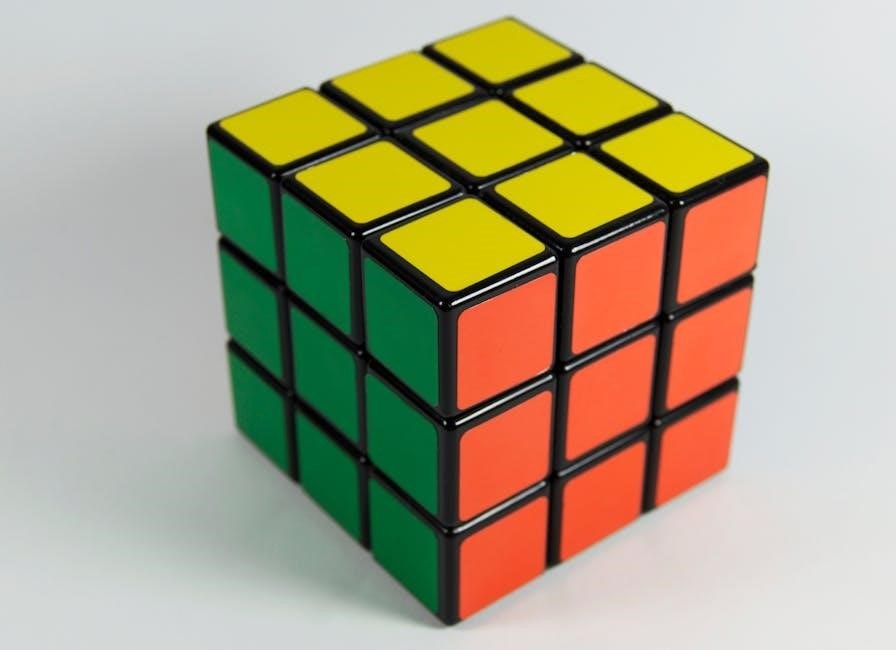
Dealing with Parity Errors
Larger cubes, like the XNXNXNXN, can encounter parity errors requiring specific algorithms for correction; downloadable PDFs often include these essential parity fixes.
What are Parity Errors?
Parity errors occur on even-layered cubes, like the XNXNXNXN, because certain permutations aren’t achievable through standard moves. These errors manifest as seemingly impossible configurations – for example, swapping two edges or twisting a single corner. They arise from the cube’s geometry and the limitations of legal moves. Solving requires specialized algorithms designed to correct these inconsistencies, effectively ‘flipping’ or ‘swapping’ pieces in a way standard methods cannot. Downloadable XNXNXNXN cube algorithm PDFs frequently dedicate sections to identifying and resolving these frustrating, yet solvable, parity situations.
Identifying Parity Errors on the XNXNXNXN Cube
Recognizing parity errors requires careful observation during the final stages of solving. Look for situations where only two edges need swapping, or a single corner appears incorrectly oriented. These aren’t typical misalignments from earlier layers. Many XNXNXNXN cube algorithm PDFs provide visual guides illustrating common parity cases. The key is to confirm all other pieces are correctly positioned; if so, a parity error is almost certain. Learning to spot these errors quickly saves time and frustration, allowing for efficient application of corrective algorithms found in dedicated resources.
Parity Algorithms for Correction
Correcting parity errors on the XNXNXNXN cube demands specific algorithms not found in standard Rubik’s Cube solutions. Downloadable PDF guides, such as those referencing Rubik’s Revenge parity algorithms, often contain these sequences. These algorithms typically involve a series of layer twists designed to swap affected pieces without disrupting the solved portions. Mastering a few key parity algorithms is crucial for consistently solving larger cubes. Remember to practice these algorithms to build muscle memory and ensure quick, accurate execution when parity arises during a solve.
Resources for XNXNXNXN Cube Solvers
Optimal Cube Solver (kociemba.org/cube.htm) and online databases provide algorithms; downloadable PDFs, like the 2×2 guide, supplement learning and offer portable references.
Optimal Cube Solver (kociemba.org/cube.htm)
Kociemba’s Optimal Cube Solver is an invaluable online tool for XNXNXNXN cube enthusiasts, offering a powerful algorithm to determine the most efficient solution. While it doesn’t directly provide downloadable PDF algorithm sheets specifically for the XNXNXNXN, understanding its solution paths can inform your learning. The site allows you to input the cube’s scrambled state and generates a move sequence.
Supplementing this with dedicated XNXNXNXN algorithm PDFs (found through searches referencing May 17, 2025, resources) is crucial. These PDFs detail layer-by-layer methods and parity correction techniques, bridging the gap between solver output and manual execution. Combining both resources accelerates mastery.
Online Algorithm Databases
Numerous online databases host algorithms for various twisty puzzles, including the XNXNXNXN cube, though dedicated resources are less common than for smaller cubes. Searching for “XNXNXNXN Cube Algorithms” alongside “PDF download” yields results, often linking to forum posts or personal websites containing compiled algorithms. These resources frequently complement the Optimal Cube Solver (kociemba.org/cube.htm) by providing human-readable move sequences.
Remember to verify the accuracy of algorithms found on unofficial databases. Cross-referencing with established speedcubing communities and comparing to downloadable PDFs from May 17, 2025, sources ensures reliability and efficient learning.
XNXNXNXN Cube Algorithm PDFs
Finding comprehensive XNXNXNXN cube algorithm PDFs can be challenging due to the cube’s complexity and relative obscurity. Several sources offer partial or complete solutions, often shared within speedcubing communities. A 17-page document referencing “XNXNXNXN Cube Algorithms Rubiks Revenge Parity Algorithms” exists, potentially containing valuable information.
Be cautious when downloading PDFs from unfamiliar sources; prioritize reputable websites and forums. These PDFs typically detail algorithms for solving layers, handling parity errors, and potentially introduce advanced techniques like the Collage Method. Always verify the algorithms’ correctness before relying on them.

Tips and Tricks for Faster Solving
Mastering algorithms from downloadable PDFs, coupled with efficient finger tricks and look-ahead techniques, dramatically improves solve times on the complex XNXNXNXN cube.
Finger Tricks and Efficiency
Efficient finger tricks are paramount when tackling the XNXNXNXN cube, minimizing pauses between moves and maximizing speed. Studying algorithms from downloadable PDF guides allows for pre-planning and fluid execution. Mastering regrips and utilizing ergonomic movements reduces strain and boosts consistency. Practice executing algorithms repeatedly, focusing on smooth transitions and minimizing finger travel.
Optimizing hand motions, such as utilizing wrist turns instead of full arm rotations, further enhances efficiency. Visualizing the next steps while executing current moves—look-ahead—is crucial. Consistent practice with downloaded resources builds muscle memory, transforming algorithms into instinctive actions, ultimately leading to faster solve times.
Look-Ahead Techniques
Developing look-ahead skills is vital for advanced XNXNXNXN solving, enabling solvers to anticipate future moves while executing current algorithms. Downloadable PDF guides showcasing algorithm sequences aid in recognizing patterns and predicting piece movements. This foresight minimizes pauses and allows for continuous turning.
Begin by focusing on identifying the next step during algorithm execution, not after completion. Practice recognizing target pieces and their destinations. Gradually expand your look-ahead range, anticipating multiple moves ahead. Utilizing algorithm charts and practicing with timed solves reinforces pattern recognition and improves predictive abilities, ultimately boosting solve speed and efficiency.
Practice and Memorization
Consistent practice is paramount for mastering the XNXNXNXN cube. Regularly applying algorithms, found in downloadable PDF guides from resources like those dated May 17, 2025, builds muscle memory and reduces reliance on conscious thought. Start slowly, focusing on accuracy, then gradually increase speed.
Memorization isn’t simply rote learning; it’s about understanding why an algorithm works. Break down complex sequences into smaller, manageable chunks. Utilize spaced repetition techniques to reinforce learning. Regularly review algorithms and practice solves to maintain proficiency and solidify your understanding of the cube’s mechanics.

Fabory Fasteners and Cube Solving (Relevance)
Fabory’s commitment to precision and quality mirrors the meticulousness required for mastering complex algorithms, often detailed in downloadable XNXNXNXN cube PDF guides.
Fabory’s Quality Standards and Precision
Fabory distinguishes itself through rigorous quality control and a dedication to precision engineering in fastener manufacturing. This commitment extends to meeting specific standards and certifications, ensuring reliability and performance. Just as a precisely engineered fastener is crucial for structural integrity, accurate algorithms are vital for solving the XNXNXNXN cube. The complexity of these algorithms, often found in downloadable PDF guides, demands a similar level of meticulousness. Understanding and applying these algorithms requires a precise approach, mirroring Fabory’s dedication to delivering consistently high-quality products. The availability of detailed guides, like those referenced from May 17, 2025, further emphasizes the need for precision in both manufacturing and problem-solving.
Applying Precision to Cube Solving
The successful navigation of an XNXNXNXN cube relies heavily on precise execution of algorithms, mirroring the exacting standards of companies like Fabory. Each turn and twist must be deliberate, akin to the careful selection and application of a fastener. Downloadable PDF guides containing these algorithms, such as those available as of May 17, 2025, become essential tools. Incorrect implementation, even by a fraction, can lead to failure. This parallels the importance of correct fastener specifications in engineering. Therefore, a methodical, precise approach – informed by reliable resources – is paramount for efficient cube solving.
LDPlayer and XNXX-Videos Guide (Relevance)
LDPlayer emulates Android, enabling visualization of algorithms; mobile resources, including potential XNXX-Videos Guide apps, may offer access to XNXNXNXN cube PDF guides.
Using Emulators for Algorithm Visualization
Android emulators like LDPlayer become incredibly useful when tackling complex puzzles like the XNXNXNXN cube. They allow solvers to access and utilize mobile applications designed for cube solving, potentially including those offering downloadable PDF guides containing algorithms. Visualizing intricate sequences of moves is crucial, and emulators facilitate this by enabling larger screen views and easier manipulation of on-screen tutorials. Furthermore, emulators can run specialized software for step-by-step algorithm demonstration, enhancing understanding and memorization. This is particularly helpful when learning advanced techniques or correcting parity errors, as detailed in available PDF resources.
Mobile Resources for Cube Solvers
Mobile applications, such as the XNXX-Videos Guide developed by iDev App, can serve as supplementary tools for XNXNXNXN cube solvers, though their direct link to algorithm PDFs isn’t explicit. These apps often provide algorithm databases or links to external resources. Solvers can utilize emulators like LDPlayer to access these mobile tools on larger screens for improved visualization. While a dedicated XNXNXNXN algorithm PDF app isn’t mentioned, general cube-solving apps may contain relevant information or direct users to websites hosting downloadable guides, including those dated May 17, 2025.

Future of XNXNXNXN Cube Solving
Continued algorithm development, alongside accessible PDF resources like those appearing in 2025, will drive faster solve times and broader participation in speedcubing competitions.
Algorithm Development
The future of XNXNXNXN cube solving hinges on innovative algorithm creation. Currently, solvers rely on methods like the Collage Method, ZBLL, and EOline, but optimization is continuous. Accessible, well-documented algorithms, often shared as downloadable PDF guides (referenced as early as May 17, 2025), are crucial for progress.
Researchers are exploring more efficient move sequences and potentially new solution methodologies. The goal is to reduce move counts and improve look-ahead capabilities. Furthermore, advancements in computer science, like those utilized by the Optimal Cube Solver (kociemba.org/cube.htm), aid in algorithm discovery and verification, leading to faster and more intuitive solving techniques for all skill levels.
Speedcubing Competitions
XNXNXNXN cube speedcubing is a growing niche within the larger speedcubing community, demanding mastery of complex algorithms. Competitors heavily rely on optimized algorithms, often learned from downloadable PDF guides – resources that have been evolving since at least May 17, 2025.
Success in competitions requires not only algorithm knowledge but also exceptional execution speed, finger tricks, and look-ahead skills. The pursuit of faster times drives continuous algorithm refinement and sharing within the community. Platforms showcasing optimal solutions, like kociemba.org/cube.htm, are vital for competitive preparation and pushing the boundaries of solving speed.



Leave a Reply
You must be logged in to post a comment.